
Geisha vs maiko: the difference explained (and how to see them)
The quick answer
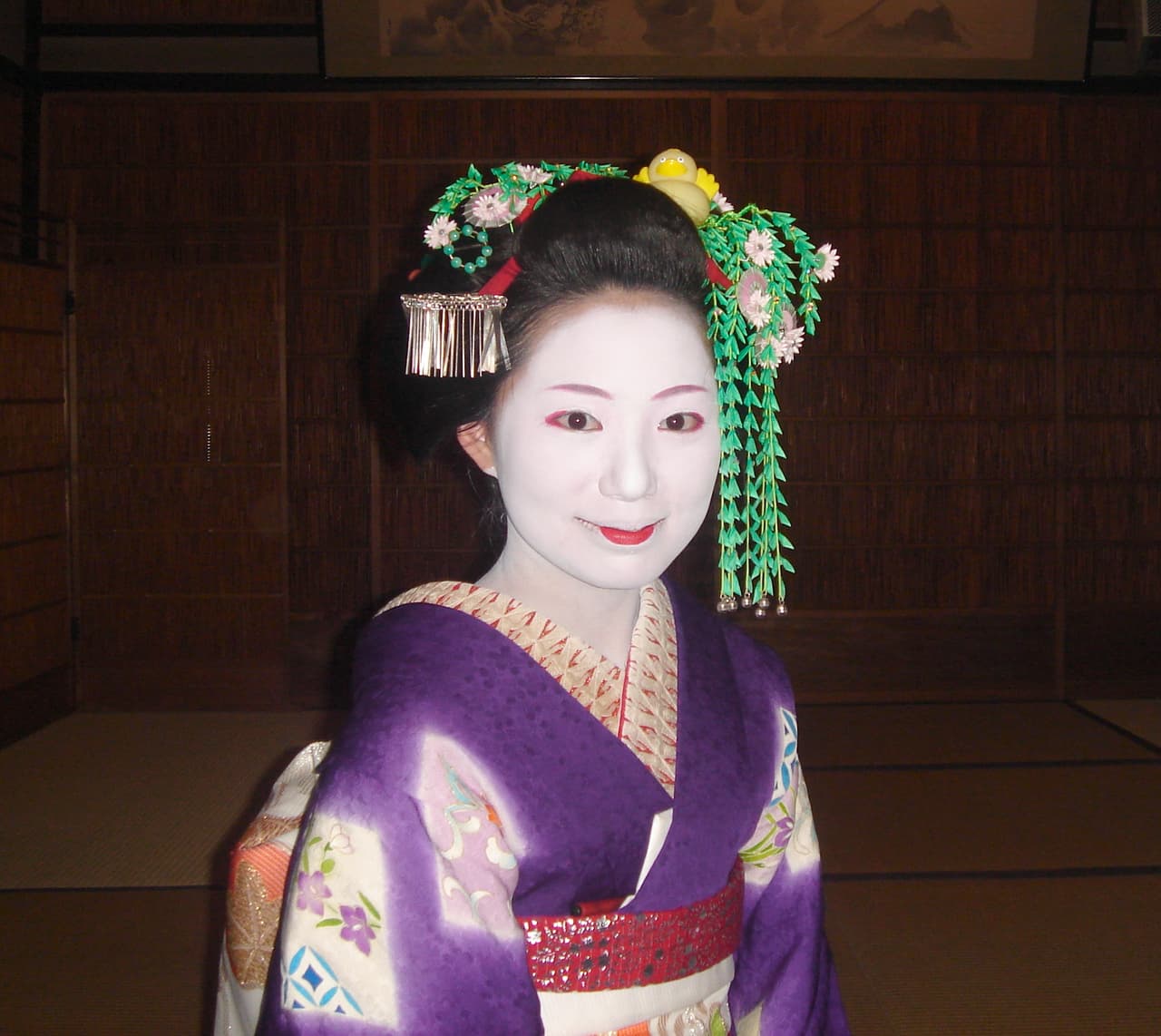
A maiko (舞妓) is an apprentice — a trainee, usually 15–20, learning to become a full geisha. A geiko (芸妓) — the Kyoto word for geisha (芸者) — is the graduated, fully-fledged artist, usually 20 and older. In one line: every maiko is training to become a geiko; a geiko has already arrived. Both are professional performing artists — dancers, musicians and hosts — not prostitutes (more on that myth below).
A quick note on words: geisha (芸者) is the national term, while geiko (芸妓) is what they are called in Kyoto, where the apprentice system survives most visibly. So in Kyoto, "geisha vs maiko" really means "geiko vs maiko."
How to tell them apart at a glance
You almost never need to ask — the apprentice signals her stage in every detail of her outfit.
| Feature | Maiko (apprentice) | Geiko / Geisha (full) |
|---|---|---|
| Age | ~15–20 | usually 20+ |
| Career stage | In training (about 5 years) | Fully qualified artist |
| Hair | Her own hair, elaborately styled | Usually a wig (katsura) |
| Hairpins (kanzashi) | Many, long, colourful, seasonal | Few, small, restrained |
| Kimono | Bright, vivid, long-sleeved | Subdued, refined colours |
| Obi (sash) | Long darari obi trailing down the back | Short, tied tight in a drum knot |
| Collar (eri) | Red, embroidered (whitens with seniority) | Plain white |
| Footwear | Okobo — tall wooden clogs (~10 cm) | Flat zōri sandals |
| Makeup | Full white face; nape left with a bare "W" of skin | More natural with experience |
Memory trick: long dangling sash + tall clogs + bright colour = maiko. Quiet colour + neat drum-knot sash = geiko.
What they actually do
Both are performing artists who train for years in classical dance (mai), shamisen and other instruments, song, tea, and the art of conversation and hospitality. They entertain at private banquets (ozashiki) in teahouses (ochaya) and on public stages. The path runs: a girl joins an okiya (geisha house), trains as a shikomi, debuts as a maiko, then "turns the collar" (erikae) from red to white to become a geiko. This refined, understated world is a living expression of the aesthetics behind wabi-sabi.
"Are they prostitutes?" — clearing up the biggest myth
No. This is the most persistent misunderstanding about Japanese culture, and it is simply wrong. It usually comes from confusion with oiran (high-ranking courtesans — a completely different historical profession) and with the so-called "geisha girls" of the post-war occupation era. A real geiko or maiko is a highly trained artist and host: her craft is dance, music and gracious hospitality. Understand that, and the kagai — the "flower-and-willow world" — finally makes sense.
Where to see a maiko or geiko in Kyoto
Kyoto has five kagai (geisha districts): Gion Kobu, Gion Higashi, Pontocho, Miyagawacho and Kamishichiken. The classic time to glimpse one is early evening, around 5:30–6 pm, as she hurries through Gion or down the lantern-lit Pontocho alley toward an engagement.
One firm rule: do not chase, touch, or block her. Many of Gion's lanes are private property, and since 2019 there have been signs warning of fines (up to ¥10,000) for photographing on certain private alleys. A maiko in the street is a professional on her way to work — not a photo attraction.
How a tourist can actually meet one — ethically and bookably
You no longer need an introduction to a teahouse. The open, respectful options:
- *Public spring dances (odori). The most famous is the Miyako Odori* (Gion Kobu, every April); others include Kamogawa Odori (Pontocho) and Kitano Odori (Kamishichiken). Check the season's dates on Japan-Event.
- Maiko dinners & ozashiki experiences. Restaurants and tour operators host a maiko for a dance, drinking games (konpira fune fune) and conversation, often with a kaiseki meal — for where to eat well around it, see Umami Hunt.
- Maiko tea-and-dance shows. Short, English-friendly afternoon performances — the easiest first-timer option.
All three let you watch the art up close while properly supporting it — far better than hunting for a snapshot in an alley.
Where this fits in your Kyoto plan
Seeing a maiko dance pairs naturally with Kyoto's other quiet, refined arts. Sit a Kyoto tea ceremony — geiko train in tea too — and build the whole thing into a day of Kyoto cultural experiences.